

Types of Smokeless Powder Explained for Handloaders
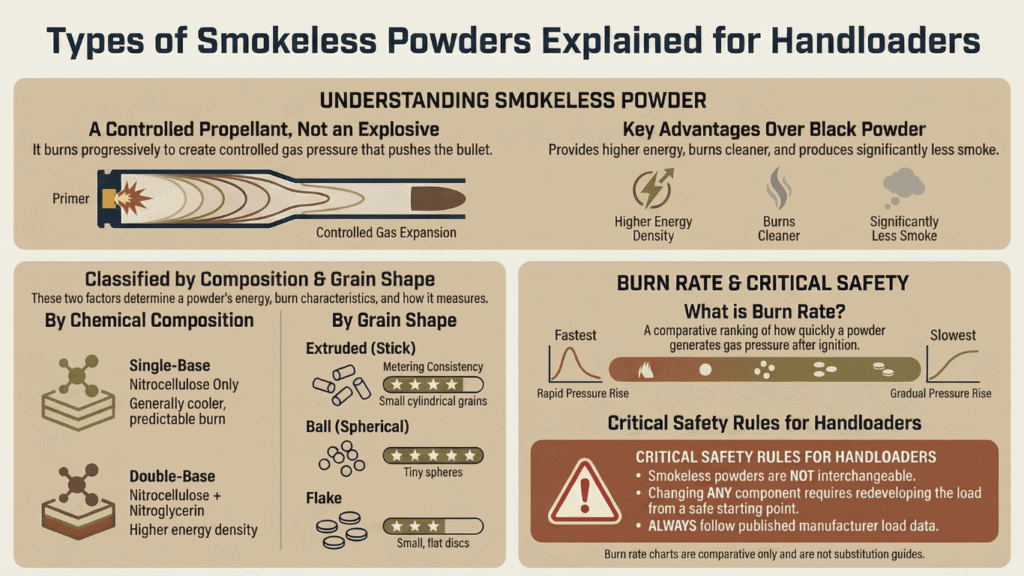 Read MoreTypes of Smokeless Powder Explained for Handloaders
Handloading ammunition requires more than following load data. It requires understanding how components behave, how pressure is generated, and why small changes can produce large results.
The Reloading Fundamentals category is an educational reference for reloaders who want to understand the core mechanics behind safe and consistent handloading. Each article focuses on a single concept and explains it in clear, practical terms—without product recommendations or sales influence.
This section is designed for beginners building a foundation and experienced reloaders who want a deeper understanding of why established best practices exist.
The articles in this category explain the building blocks of modern handloading, including how individual components function and how they interact inside the cartridge and firearm.
Topics covered include:
How smokeless powder works and why powders differ
Powder burn rates and pressure behavior
Single-base vs double-base powder composition
Powder shapes and their effect on metering and ignition
Why published load data cannot be interchanged
How temperature, case volume, and bullet design affect pressure
Safe handling, storage, and labeling of reloading components
Each article addresses one fundamental concept at a time, allowing you to build knowledge systematically rather than relying on fragmented advice.
Reloading data provides numbers. Fundamentals explain the limits behind those numbers.
Understanding reloading fundamentals helps you:
Interpret load manuals correctly
Recognize unsafe substitutions before they become dangerous
Diagnose pressure signs with context
Maintain consistency across different rifles, pistols, and environments
Avoid common mistakes that cause erratic performance or equipment damage
These articles focus on cause and effect, not shortcuts.